OOG & Breakbulk Units
Out-of-gauge pieces that will not fit a standard box — vessels, transformers, structural sections, and machinery arriving as breakbulk. These are lift-off moves, coordinated so the crane and our trailer meet at the same moment.
Collection from Jebel Ali Port and delivery to construction sites, plants and yards anywhere in the UAE — gate formalities to final placement.
Same-day response • Fastest via WhatsApp
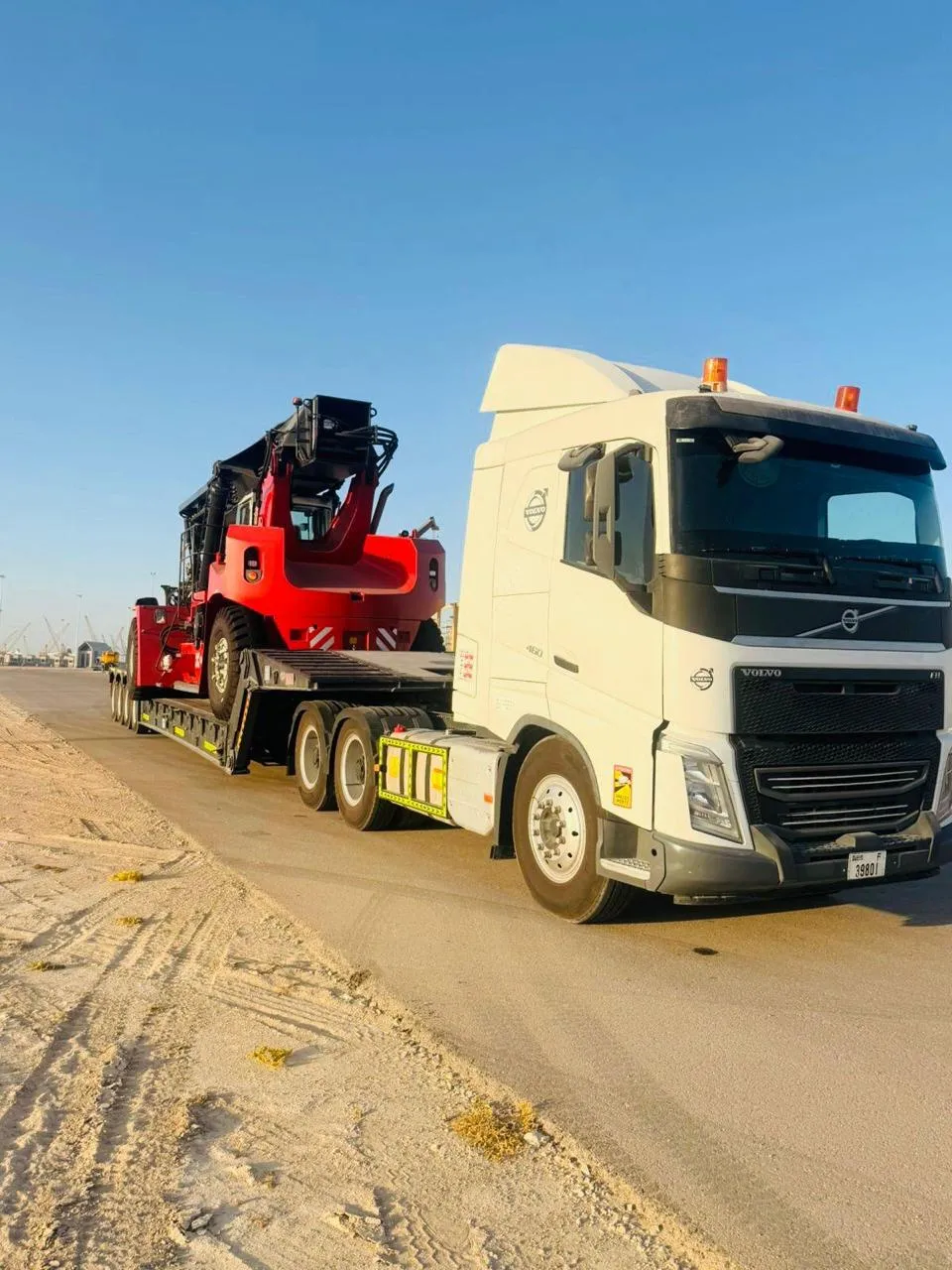
EQP AXIS is the specialist road leg for heavy and out-of-gauge cargo landing at Jebel Ali Port. We can work from your clearing agent’s release or provide the wider customs-to-door service, then take the unit from the terminal to a construction site, plant, or yard anywhere in the UAE.
Port collections are the most time-sensitive work we do, and for a straightforward reason. Once the free period ends, storage charges accrue daily against cargo that is doing nothing. So these moves get planned around the release of the cargo rather than around our own schedule.
Jebel Ali is where most of this work happens, and we also collect from Khalifa Port and Hamriyah where the routing suits. If your cargo is landing at a different terminal, ask — the constraint is usually the road leg, not the port.
Jebel Ali handled a record 5.67 million tonnes of breakbulk in 2025, up 6% year on year according to DP World — and breakbulk is precisely the cargo that cannot simply be put on a standard trailer and driven away.
Out-of-gauge pieces that will not fit a standard box — vessels, transformers, structural sections, and machinery arriving as breakbulk. These are lift-off moves, coordinated so the crane and our trailer meet at the same moment.
These are the only container types we target, and deliberately so. They carry the cargo that actually needs specialised trailers, permits, and engineered securing — standard closed boxes are forwarder work.
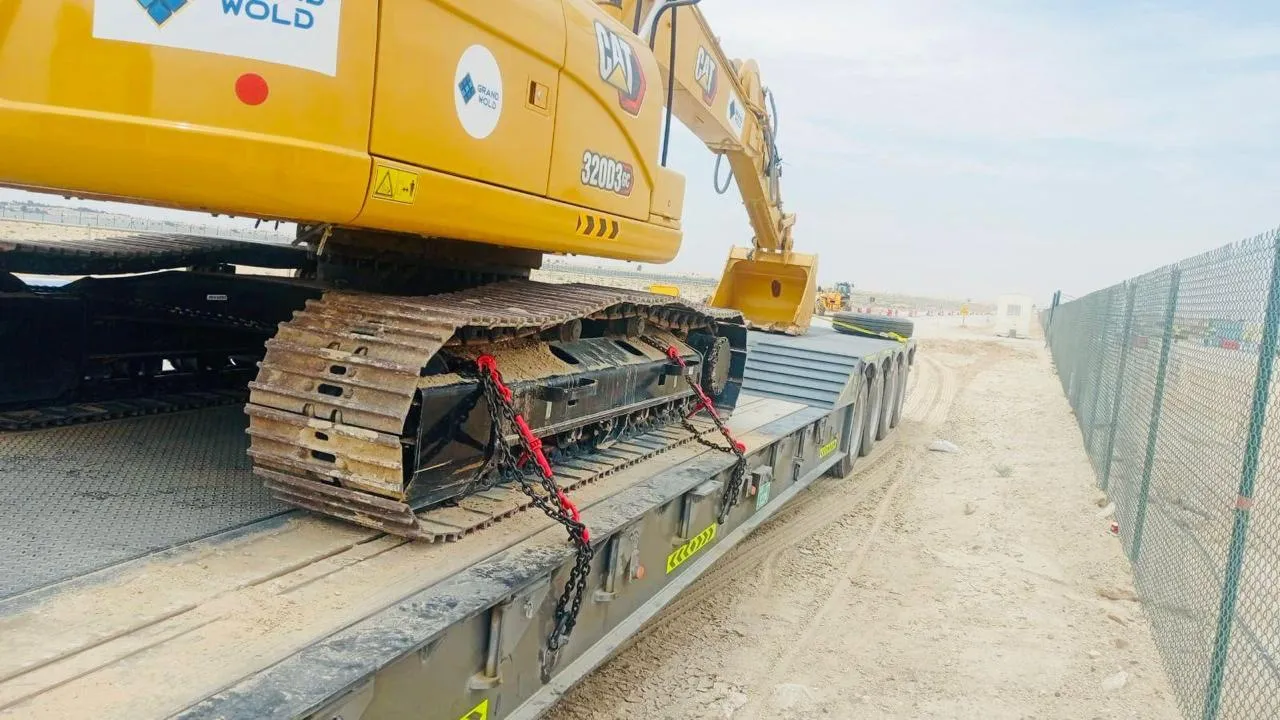
Excavators, loaders, generators, compressors, and plant arriving for projects or fleet expansion. Tracked and tall units move to a lowbed so travel height stays legal once the deck is under them.
We work as the road leg for freight forwarders who have the sea freight and clearance covered but need heavy-haul capability inland. One point of contact, and we work to your schedule rather than issuing our own.
We work back from the confirmed customs release timing so the trailer is at the gate when the cargo is available — not a day either side of it.
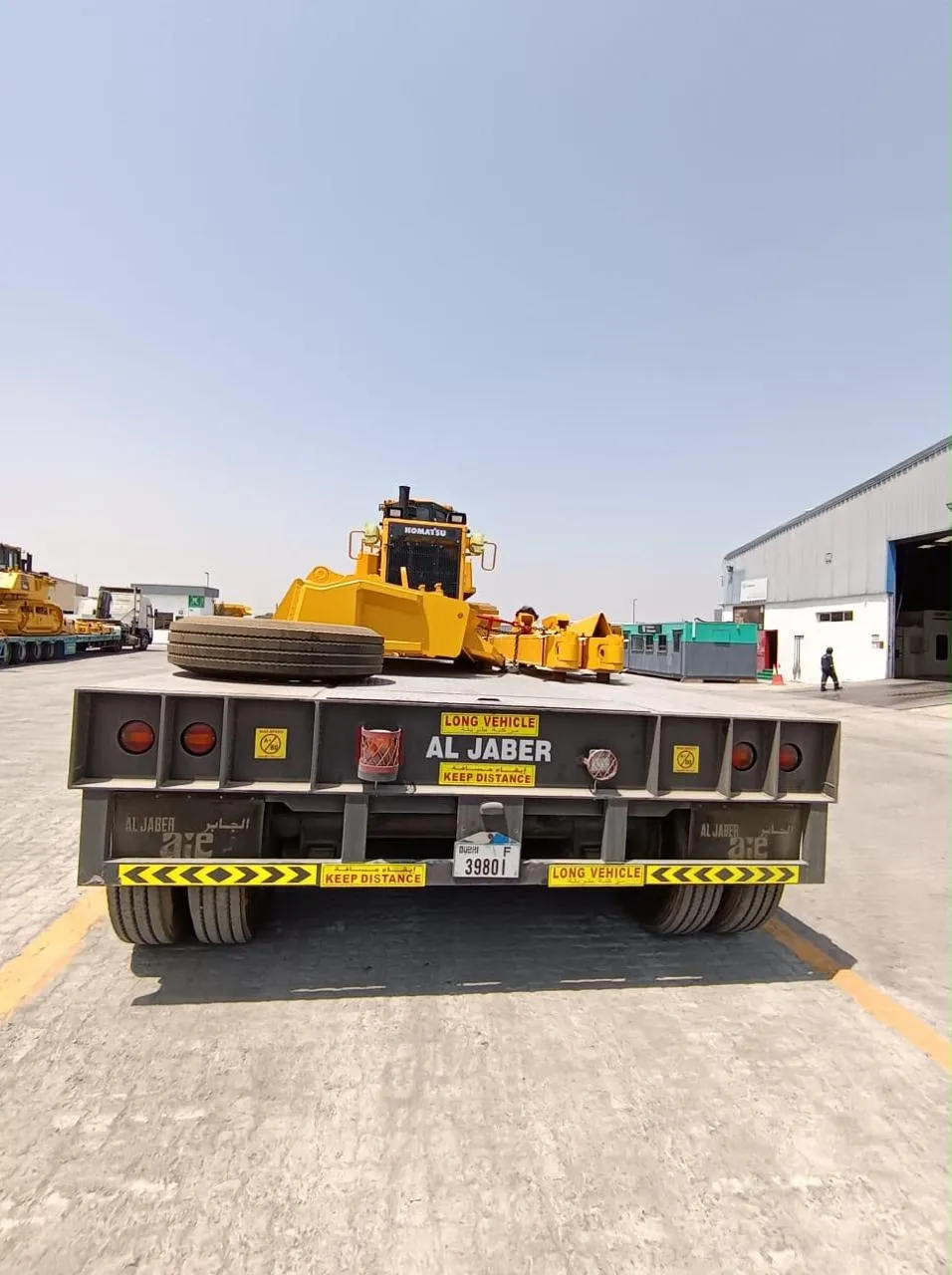
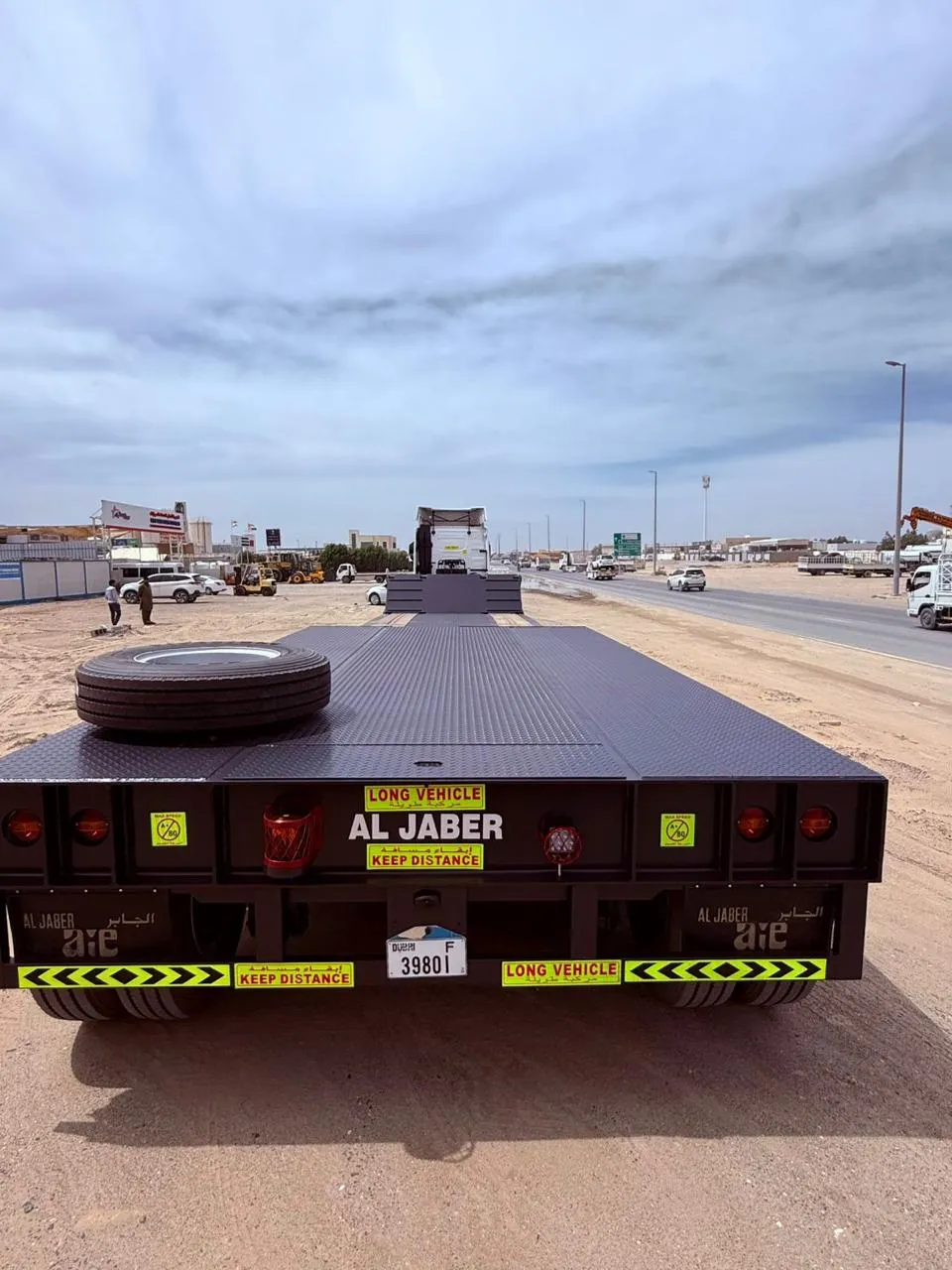
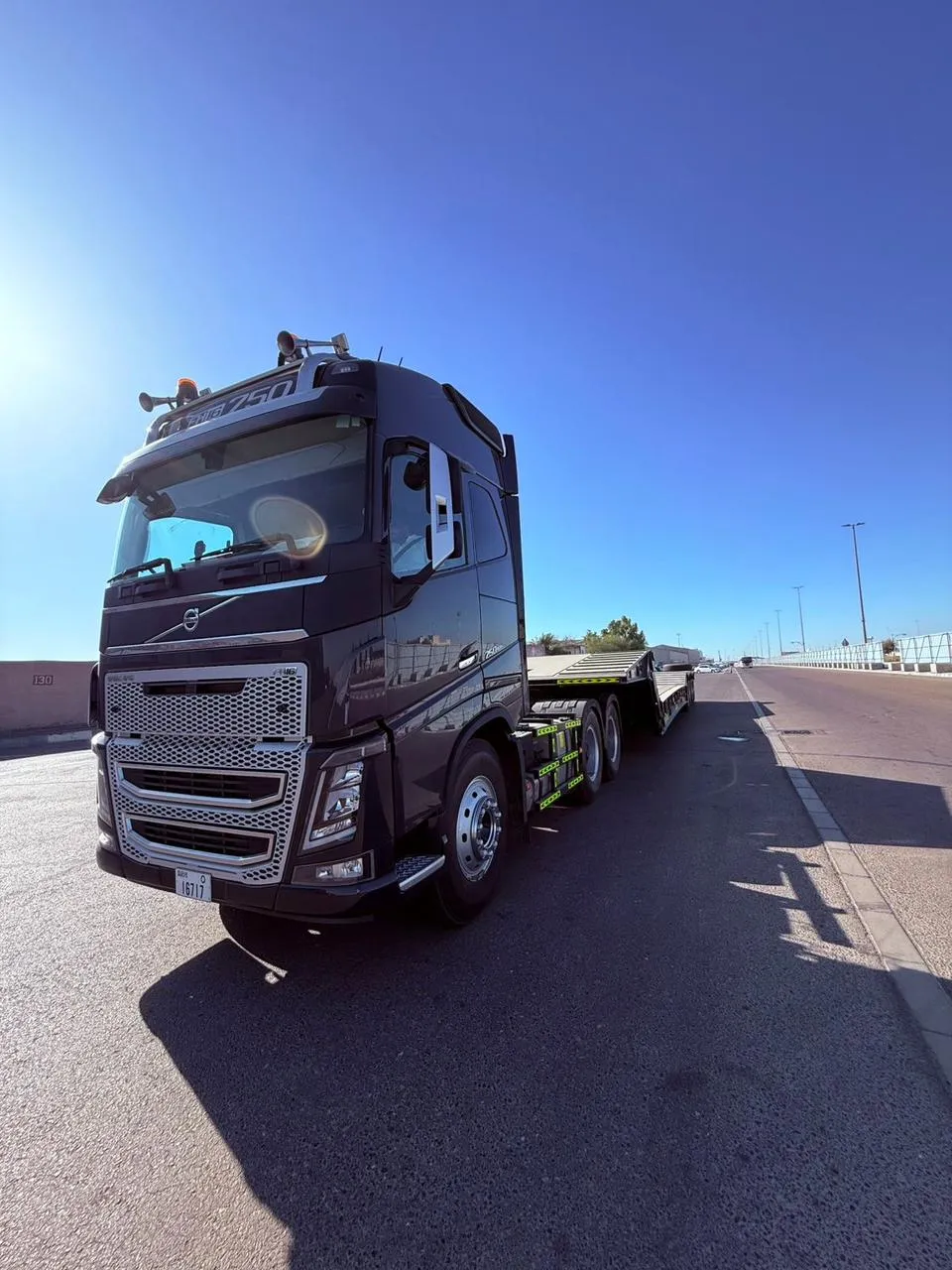
Weight and dimensions decide the unit. Tall or tracked cargo goes to a lowbed; flat-deck cargo to a flatbed; anything past 130 tons net needs the 6-axle with its extension fitted.
For OOG and breakbulk, the terminal crane lifts directly onto our deck. We position, secure, and lash before anything moves, with the load placed over the axle groups rather than centred by eye.
If the unit exceeds the legal envelope, RTA and police permits and escort vehicles are arranged in-house, along with a height and bridge-clearance check on the delivery route.
We deliver to the site, plant, or yard and support the offload — including ramp offloading for self-propelled machines and positioning for crane lifts.
Need customs clearance, warehousing, and final delivery under one scope?See our customs-to-door logistics service.
Send the vessel, ETA, and cargo details. We will confirm the trailer, whether permits are needed, and a realistic collection window.
A lot of heavy cargo does not leave Jebel Ali in one move. Equipment gets stored, worked on, or staged inside JAFZA before it goes anywhere, and each of those steps is a trailer movement of its own.
We handle yard-to-yard moves inside the free zone and zone-exit moves out to the mainland, with the same trailer selection and securing standards as a long-haul run. Short distance does not make a 90-tonne machine easier to move — it just means the loading matters more than the driving.
Collection point
Regular delivery destinations
Onward movements from Jebel Ali to Oman and Saudi Arabia are also regular work, with the customs and permit paperwork for the crossing handled in-house rather than passed to a third party.
Port cargo arrives in whatever shape it arrives in, so trailer choice is decided by the unit rather than by what happens to be free that day.
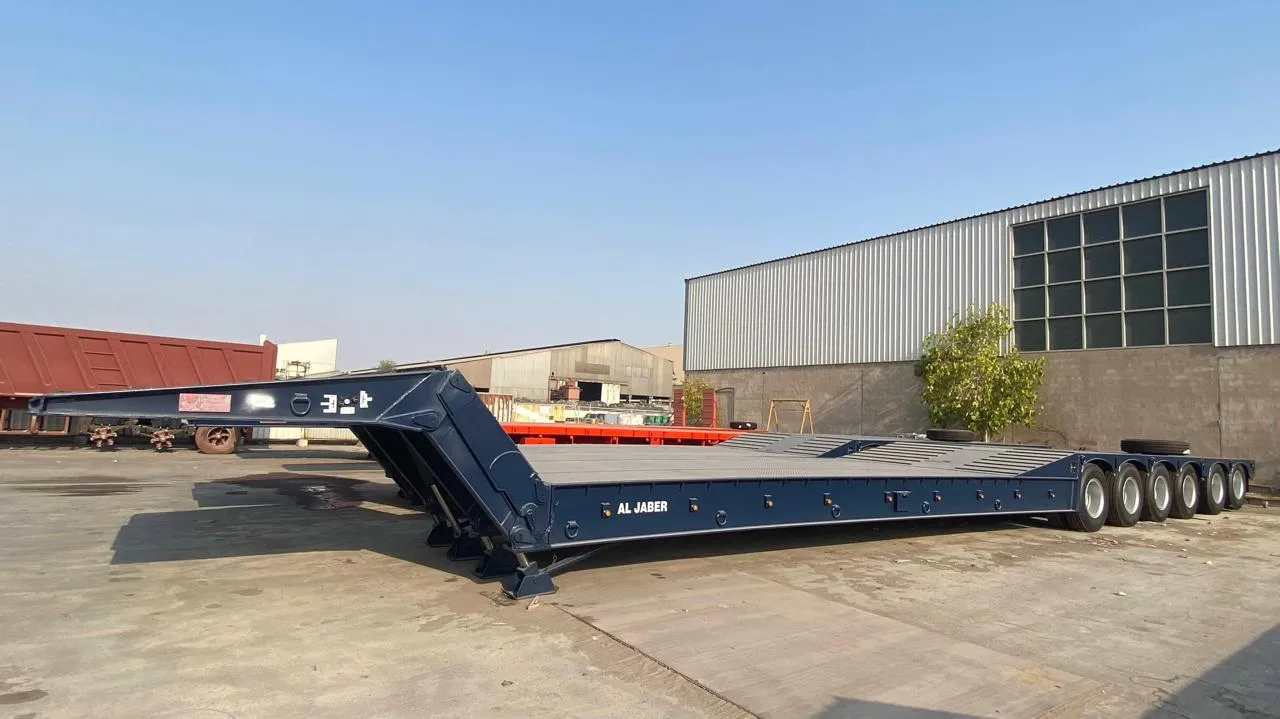
Yes. OOG and breakbulk units are collected from the terminal with the lift-off coordinated against our trailer arrival, so the unit is placed straight onto the deck rather than double-handled. We select the trailer and axle configuration from the unit dimensions and weight before the collection is scheduled.
Yes. EQP Axis can coordinate the delivery order, gate pass, customs clearance, and collection as one service, or work with your appointed clearing agent when you only need the heavy transport leg. Confirm the scope when you send the shipment details.
Flat racks and open tops. Those are the container types that carry cargo needing specialised trailers, permits, and securing. Standard closed boxes are general haulage work and better served by a container forwarder.
It depends on when the cargo is released, when the gate pass clears, and trailer availability for the unit size. Send the vessel name and ETA with the cargo details and we will confirm a realistic collection window rather than a number we cannot hold to.
Yes — all seven Emirates, including Abu Dhabi industrial areas such as Musaffah, ICAD and KEZAD, and the northern emirates. Cross-border movements to Oman and Saudi Arabia are also regular work, with the paperwork handled in-house.
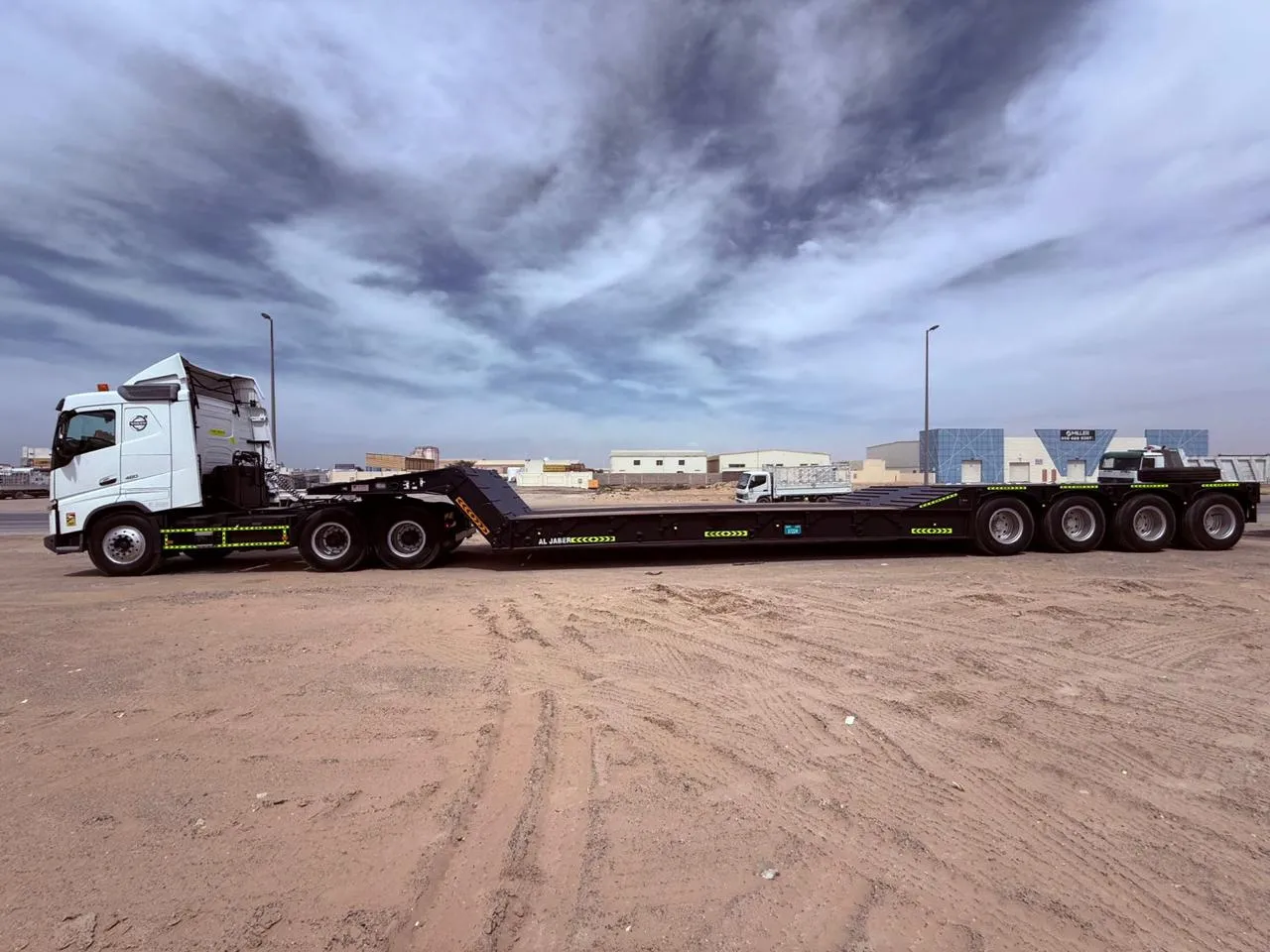
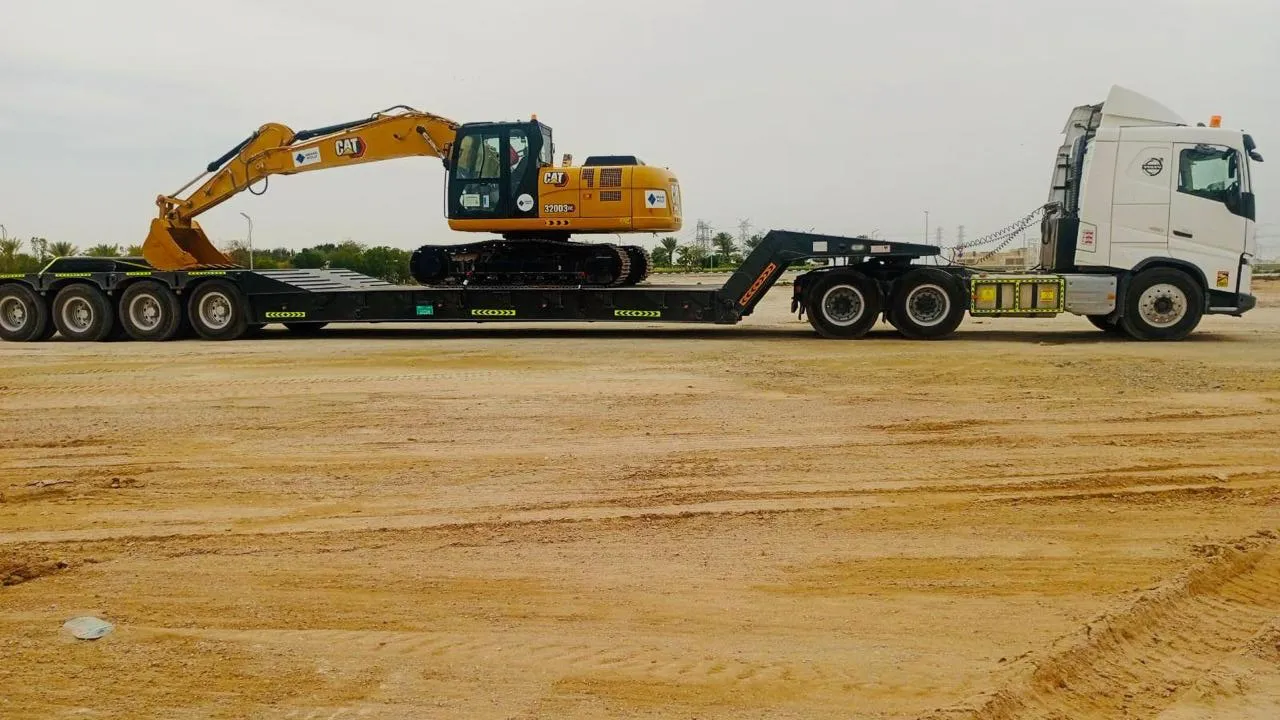
The vessel name, ETA, and delivery-order status tell us when the cargo is actually collectable. Add the cargo dimensions and weight and we can confirm the trailer and any permits in the same reply.
Vessel and release information matters as much as the cargo specs here — it decides when we can be at the gate.
Send the details now and get trailer and timing confirmation the same day.